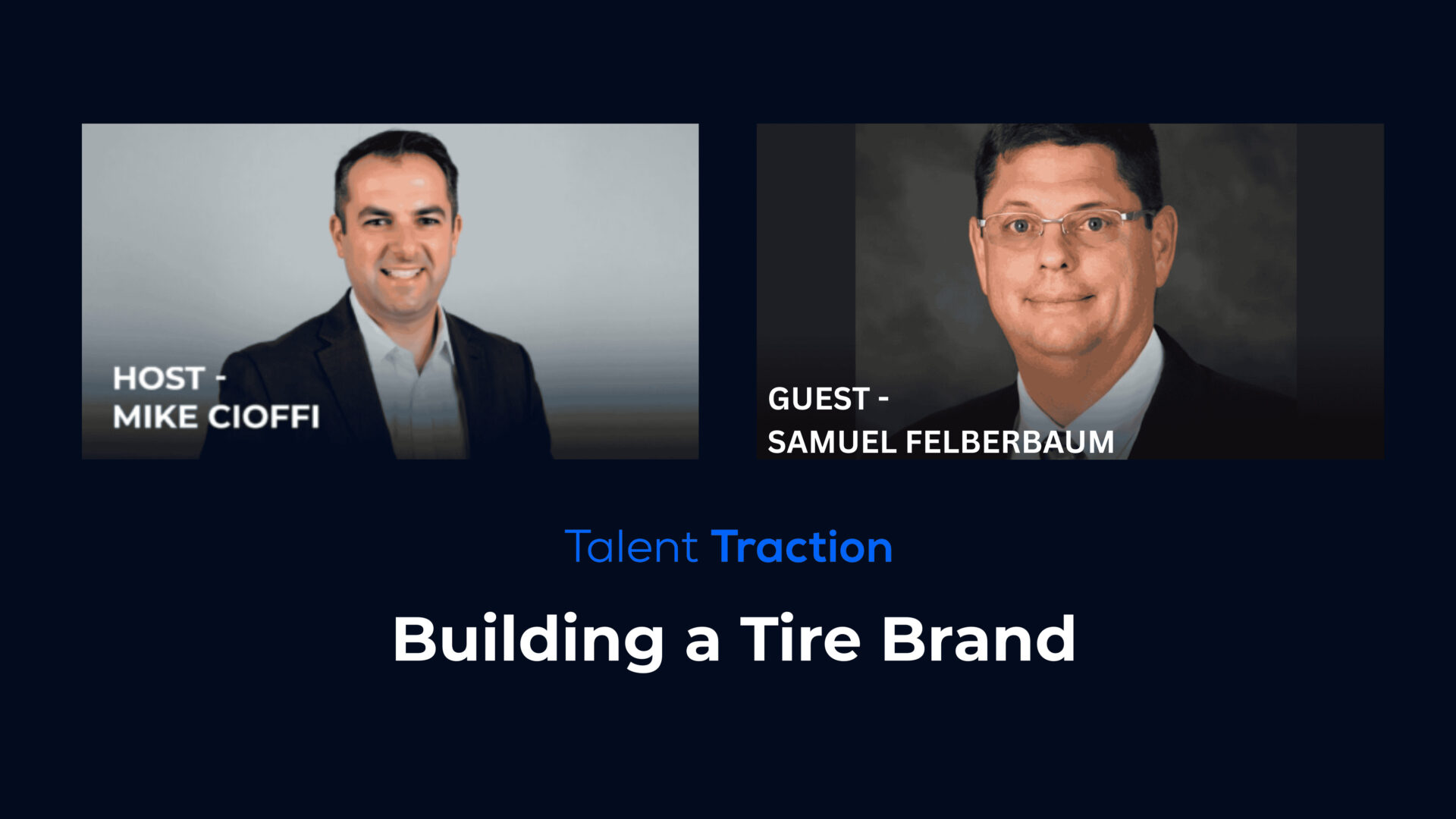
A Conversation with Samuel Felberbaum, President of Prinx Chengshan Tire North America
Building a tire brand in North America has never been easy. In today’s market, it’s even harder.
The U.S. tire industry is one of the most competitive and brand-saturated markets in the world dominated by long-established players, shaped by global trade dynamics, and flooded each year with new entrants from overseas manufacturing plants. For emerging brands, breaking through the noise requires far more than low prices or incremental quality improvements.
In this episode of the Talent Traction Podcast, Samuel Felberbaum, President of Prinx Chengshan Tire North America, shares a candid, experience-driven look at what it really takes to build a tire brand in today’s environment and why people, trust, and long-term thinking matter more than ever.
The Reality Check: A Market Crowded with Brands
One of the biggest surprises Samuel encountered when entering the North American market was just how crowded the landscape truly is.
Each tire manufacturing plant requires its own DOT code, a unique identifier stamped on the tire sidewall that shows where the product is made. In just one recent year, 24 new DOT codes were issued to overseas plants alone, a clear signal of how many brands are attempting to enter the U.S. market.
The takeaway is simple: competition isn’t coming, it’s already here.
The U.S. remains the most important proving ground for tire manufacturers worldwide. Success in America often determines a brand’s credibility everywhere else. But entering this market without a clear strategy can be a costly lesson.
Standing Out: Signal Over Noise
So how does a brand break through?
According to Samuel, it’s never one thing it’s a combination of fundamentals executed consistently:
- The right people in front of customers
- Quality products at the right price point
- Ongoing investment in brand awareness
Price alone doesn’t build a brand. Quality alone doesn’t either. Sustainable growth happens when all three move together.
Prinx Chengshan operates two brands in North America Prinx and Fortune and growing both simultaneously has required patience, discipline, and a long-term view. Brand building isn’t linear, and it doesn’t happen overnight.
Resisting the Race to the Bottom on Price
One of the most common mistakes new entrants make is trying to compete solely on price. Samuel is clear: being the cheapest is rarely a winning strategy.
“There’s always someone who can go lower,” he notes. “That’s short-term thinking.”
Instead, Prinx Chengshan’s approach is to:
- Understand where the brand fits in the market
- Let dealers decide how the brand performs within their own good–better–best frameworks
- Focus on profitability for the dealer, not just sell-in pricing
If a dealer can make money selling the product, brand perception improves organically. In many cases, profitability matters more than where a brand is labeled in a tier system.
What Dealers Really Want from Manufacturers
Despite all the noise around pricing, technology, and trends, dealer expectations remain grounded and consistent.
According to Samuel, dealers want four things above all else:
1. Trust and Credibility
Tire manufacturing is global, but relationships are local. Dealers rely on North American teams to be the bridge to overseas factories. That means accuracy, transparency, and consistency are non-negotiable.
2. Reliable Fill Rates and On-Time Delivery
With overseas manufacturing, lead times can stretch from 75 to 120 days. Maintaining predictable supply ideally within a 90–100 day window is critical to dealer confidence and inventory planning.
3. Products That Match Market Demand
All-weather tires, AT2 products, and emerging segments must be addressed quickly. Manufacturers that lag demand lose relevance fast.
4. Price Stability
Perhaps the hardest to control, price stability matters deeply. Ocean freight volatility, tariffs, and regulatory changes create challenges, but dealers value manufacturers who minimize surprises and communicate clearly.
The Human Side of Brand Building
One theme that surfaced repeatedly in the conversation is that this is still a face-to-face business.
Despite the rise of Zoom, Teams, and email, Samuel believes tire brands are built on the road not behind a screen. Prinx Chengshan’s sales teams spend roughly three weeks a month visiting customers. Samuel himself spends nearly every week traveling.
That presence delivers two advantages:
- Stronger dealer trust
- Real-time market intelligence that feeds better leadership decisions
You can’t understand dealer challenges or market shifts without being there.
Leading Through Volatility and Aggressive Targets
The past few years have tested even the most experienced leadership teams. Anti-dumping rulings, tariff changes, freight instability, and regulatory uncertainty created shifting targets for 2025.
Samuel emphasizes that leadership during volatility comes down to clarity and transparency:
- Weekly communication with teams
- Clear focus on controllables: orders and expenses
- Shielding frontline teams from unnecessary noise
When people understand what they can control and trust leadership to manage the rest morale holds.
Looking Ahead: What’s Next for the Tire Industry?
When asked about the next five to ten years, Samuel highlights several forces shaping the industry’s future:
- Regulation and compliance, including tire stewardship and environmental mandates
- Raw material uncertainty, particularly natural rubber supply and climate impacts
- Anti-dumping cycles, following new manufacturing capacity
- Online tire sales growth, balanced by continued reliance on brick-and-mortar and mobile installation
- Driver shortages in the TBR segment, as aging drivers exit the workforce
On EVs, Samuel offers a pragmatic perspective: while EVs generate outsized attention, they remain a small percentage of total vehicles. Prinx Chengshan chose to prioritize all-weather and EV-compatible tires rather than chasing EV-only products a decision rooted in market reality, not hype.
Competing with Clarity and Core Values
Perhaps the most important takeaway from the conversation is this: no one hands you market share.
Winning in the tire industry requires:
- A clear competitive path
- Strong core values
- Willingness to compete head-on
- Products that deliver quality and profitability
Dealers make investments when they take on a brand. Manufacturers must respect that by showing up, delivering consistently, and competing with integrity.
In a market this crowded, brands that last are built deliberately one relationship at a time.