Key Takeaways
- Manufacturing recruitment trends in 2026 are being reshaped by labor scarcity, technology shifts, and generational change.
- Employers who rely on outdated hiring models will struggle to staff plants, retain leaders, and scale operations.
- Recruiters must move beyond transactional hiring toward workforce strategy, leadership pipelines, and long-term talent resilience.
The manufacturing recruitment trends of 2026 are not incremental shifts; they represent a structural reset in how talent is found, evaluated, and retained. For recruiters, HR leaders, and operations executives, the old playbook is no longer enough. Job boards alone won’t fill roles. Signing bonuses won’t fix retention. And speed without quality will only compound turnover.
Across the U.S., manufacturers are navigating a convergence of pressures: retirements accelerating faster than replacements, reshoring and new plant openings straining local labor markets, and rising expectations from a workforce that now spans five generations. The result is a recruiting environment where strategy matters more than volume, and execution matters more than ever.
Below are the five manufacturing recruitment trends that will define 2026 and determine which organizations win the talent war and which fall behind.
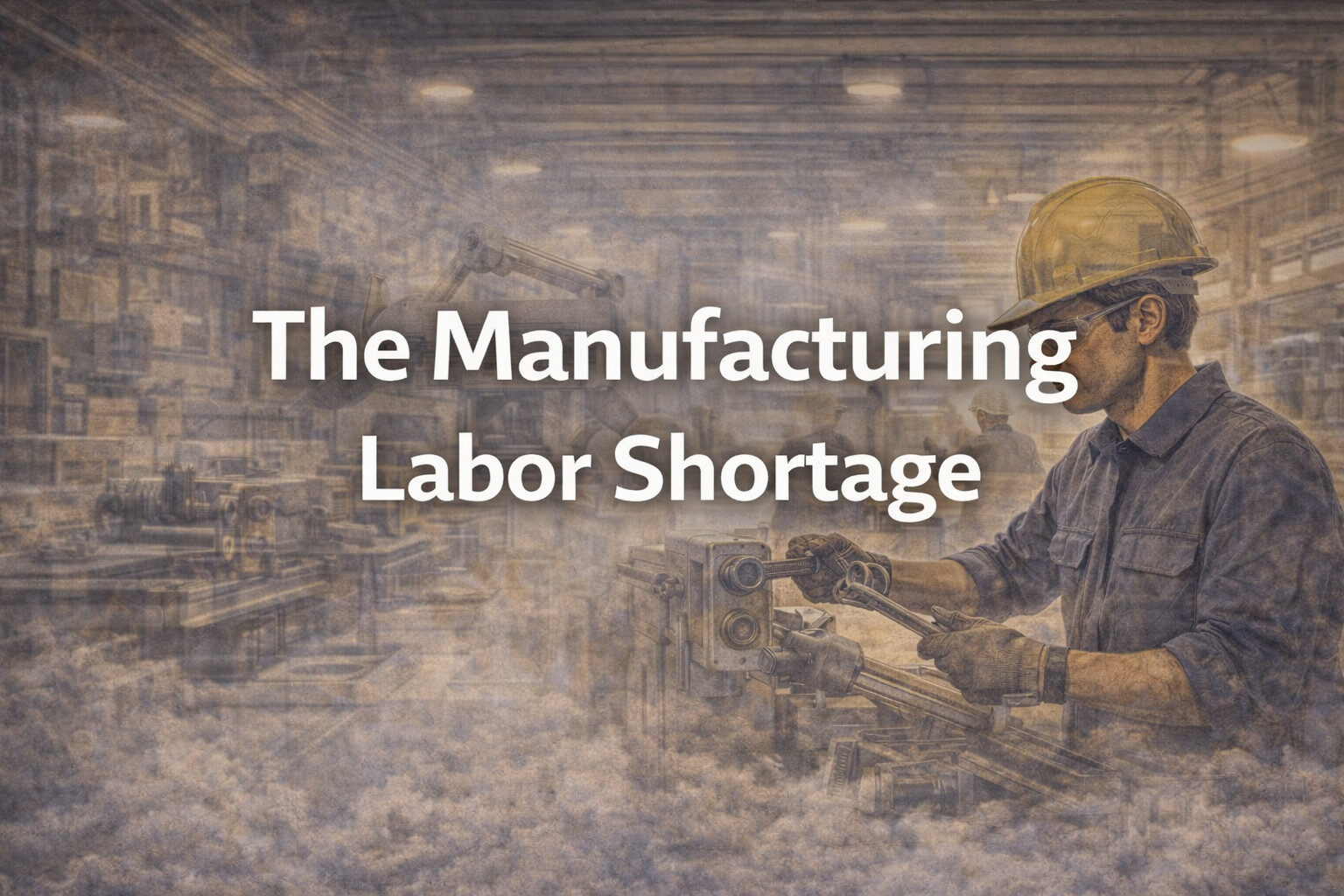
1. The Manufacturing Labor Shortage Is Now Structural, Not Cyclical
For years, hiring challenges in manufacturing were framed as temporary tight labor markets that would loosen with economic cycles. That assumption no longer holds.
What’s changed
- The U.S. manufacturing workforce is aging rapidly, with a disproportionate share of skilled technicians, supervisors, and managers nearing retirement.
- Fewer younger workers are entering traditional manufacturing career paths, even as demand for production, maintenance, and quality roles increases.
- New investments in reshoring, EVs, semiconductors, and advanced materials are creating more jobs than the market can supply.
According to industry workforce projections, manufacturers could face hundreds of thousands of unfilled roles annually through the second half of the decade. This is not a short-term dip it’s a long-term talent gap.
What this means for recruiters
Recruiting can no longer be reactive. Posting jobs after a vacancy opens is too late. In 2026, successful manufacturers are:
- Building continuous candidate pipelines for critical roles
- Forecasting workforce needs 12–36 months ahead
- Treating recruiting as a core operational function, not a support service
Recruiters who can think strategically partnering with leadership on workforce planning will be indispensable.
2. Leadership and Middle-Management Hiring Has Become the Bottleneck
One of the most overlooked manufacturing hiring trends is the growing shortage of front-line and mid-level leaders.
The hidden risk
Many manufacturers focused heavily on filling entry-level and technical roles over the past decade. Meanwhile, the traditional leadership pipeline where supervisors learned the business from the ground up has eroded.
Compounding the problem:
- Automation has reduced some entry-level roles that historically fed leadership development
- Burnout among supervisors has increased turnover
- Fewer workers want management roles without better support and training
The result is a widening gap between senior leadership and the plant floor.
What this means for recruiters
In 2026, recruiting leaders, not just workers will be a competitive advantage. Recruiters must:
- Assess leadership capability, not just tenure
- Identify high-potential internal candidates earlier
- Help organizations design intentional succession and development paths
Manufacturers that fail to solve the leadership gap will struggle with safety, productivity, culture, and retention regardless of how many hourly roles they fill.
3. Skills-Based Hiring Is Replacing Credential-Based Screening
Another defining manufacturing recruitment trend for 2026 is the shift away from rigid credential requirements.
Why this is happening
- Many manufacturing roles require hands-on competence, not formal degrees
- Degree inflation has unnecessarily shrunk candidate pools
- Military veterans, career switchers, and nontraditional workers often outperform on the job but get screened out early
In response, progressive manufacturers are moving toward skills-based hiring, focusing on what candidates can do rather than where they studied.
What skills-based recruiting looks like in practice
- Clear definition of role-critical skills and competencies
- Practical assessments, simulations, or work samples
- Structured interviews aligned to real job challenges
What this means for recruiters
Recruiters must become translators working with operations to:
- Redefine job requirements
- Remove unnecessary barriers
- Build fair, repeatable evaluation processes
Those who master skills-based recruiting will unlock new talent pools while improving hiring quality and retention.
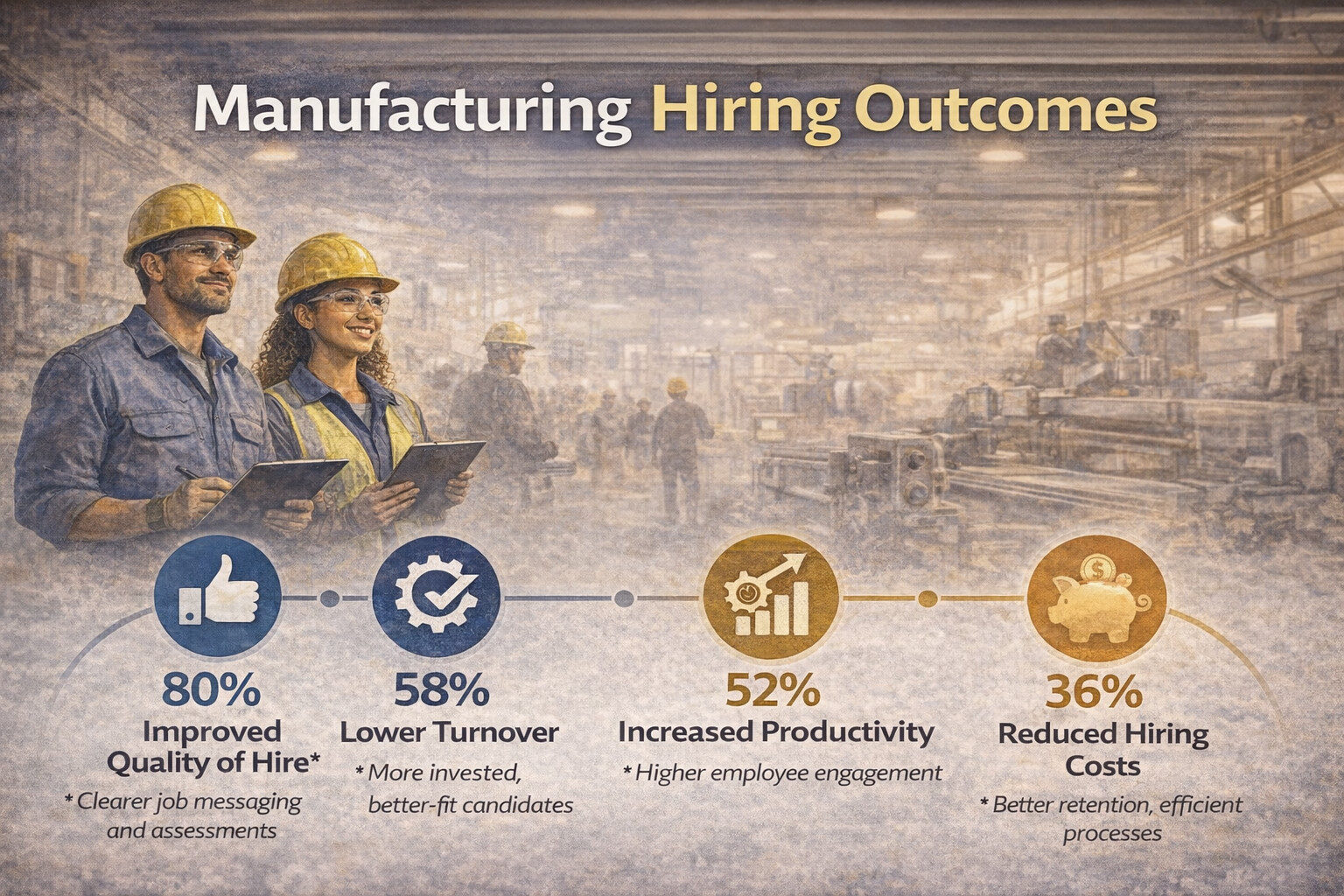
4. Employer Brand Now Directly Impacts Manufacturing Hiring Outcomes
Historically, employer branding was seen as a “nice to have” in manufacturing. In 2026, it’s a hiring necessity.
The new reality
Today’s candidates, especially younger workers, research employers extensively before applying. They care about:
- Safety culture
- Leadership credibility
- Schedule stability and predictability
- Career progression
- Respect and communication on the shop floor
Manufacturers with poor reputations struggle to attract talent even with competitive pay.
What this means for recruiters
Recruiters are now stewards of the employer brand. In practice, that means:
- Aligning recruiting messages with real employee experience
- Being transparent about job demands and expectations
- Partnering with leadership to address reputation risks
An honest, well-managed employer brand attracts better-fit candidates and reduces early turnover.
5. Recruitment Is Becoming Integrated With Workforce Strategy
The final and perhaps most important manufacturing recruitment trend in 2026 is integration.
What’s changing
Recruiting is no longer a standalone function. Leading manufacturers are integrating talent acquisition with:
- Workforce planning
- Safety initiatives
- Leadership development
- Retention and engagement strategies
This reflects a broader understanding: hiring decisions today shape operational performance years down the line.
What this means for recruiters
Recruiters who succeed in 2026 will:
- Understand the business, not just the job description
- Speak the language of operations, finance, and leadership
- Advise not just execute
This shift elevates recruiting from transactional hiring to strategic partnership.
What Recruiters Should Do Now to Prepare for 2026
To stay ahead of these manufacturing recruitment trends, organizations should focus on five priorities:
- Audit your workforce pipeline – Identify where retirements and attrition will hit hardest.
- Strengthen leadership hiring – Treat supervisors and managers as mission-critical roles.
- Adopt skills-based frameworks – Expand access to overlooked talent pools.
- Invest in employer credibility – Fix reputation gaps before they impact hiring.
- Align recruiting with strategy – Bring talent discussions into executive planning.
Manufacturing companies that act early will not only fill roles they’ll build durable teams capable of navigating uncertainty.
Final Thoughts: Why 2026 Is a Turning Point for Manufacturing Recruitment
The manufacturing sector is entering a decisive period. Demand is rising, technology is accelerating, and the workforce is changing faster than many organizations can adapt.
The recruiters who thrive in 2026 will not be those who move fastest but those who think furthest ahead.
Manufacturing recruitment trends in 2026 demand a shift from volume to value, from speed to strategy, and from transactional hiring to long-term talent stewardship. Companies that recognize this now will be positioned to lead and not react in the years ahead.