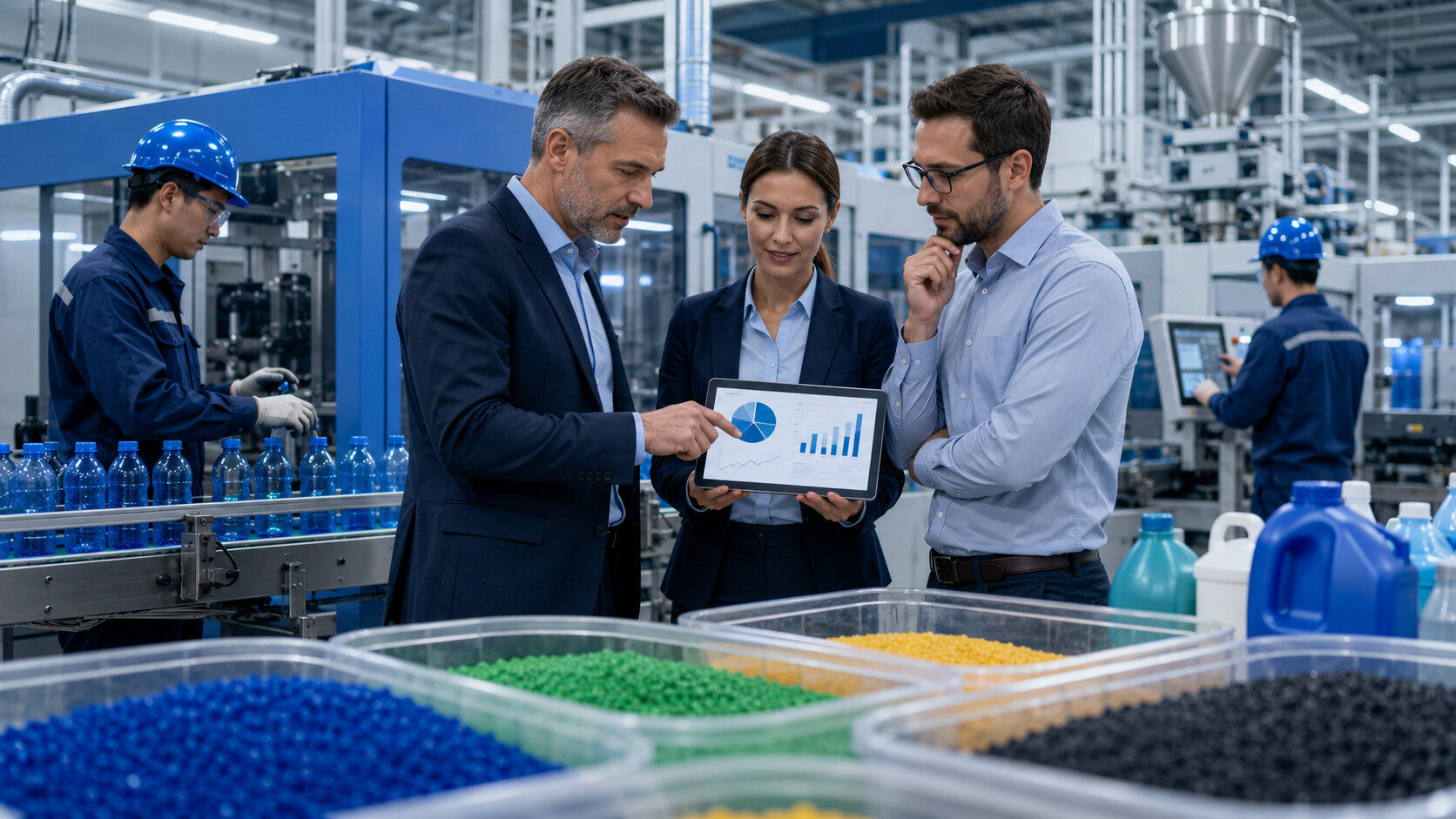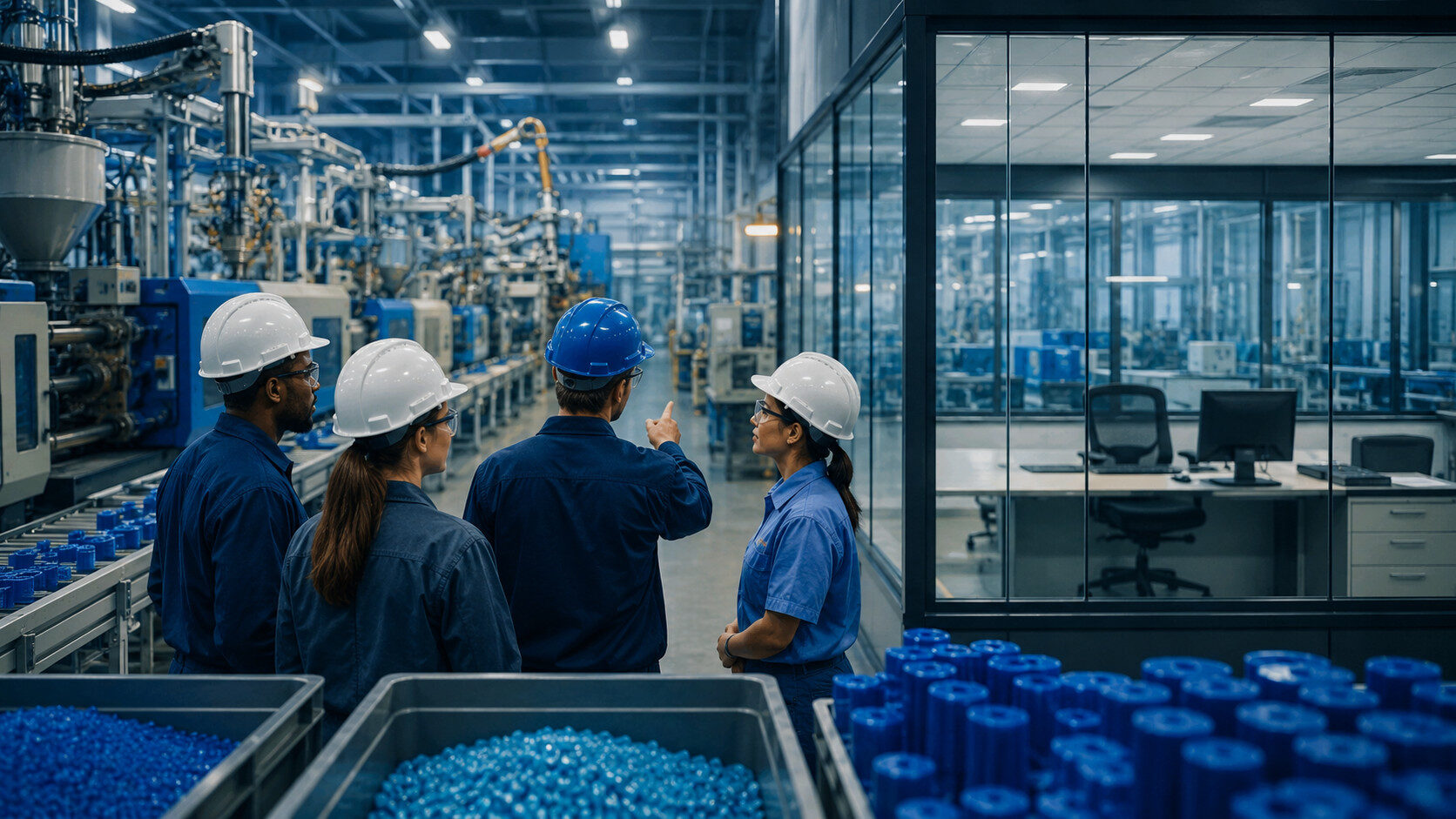
There is a promotion pattern so common in plastics manufacturing that most people in the industry no longer notice it — which is probably why it keeps causing the same problems.
A process engineer solves a persistent quality issue that three other engineers couldn’t crack. A production lead consistently runs the tightest shift on the floor. A toolroom technician knows the tooling in a facility better than anyone alive. So when a supervisor opening comes up, or a plant manager role needs to be filled, the organization does what feels natural: it promotes the person who is best at the technical work.
And then, six to twelve months later, wonders why the team is struggling.
This is the leadership gap in plastics manufacturing — and it isn’t a people problem or a competence problem. It’s a structural problem, created when organizations treat technical excellence as a sufficient qualification for management, and then provide almost nothing in the way of support to bridge the gap between what made someone great at their individual role and what being a manager of people actually requires.
The Promotion That Feels Like a Reward
When a high-performing technical contributor gets promoted into management, the organization usually believes it is doing two things at once: rewarding performance and deploying expertise where it can have the most leverage. This logic is appealing. It also ignores what the job actually changes.
A process engineer’s job is to understand and optimize a system. A manager’s job is to understand and develop people — and people are considerably less predictable than a cure cycle. The skills that made the engineer excellent — deep technical knowledge, systematic problem-solving, precision, a low tolerance for variation — do not automatically transfer into the skills that management requires: communication, conflict navigation, motivating people whose goals and working styles are different from your own, holding difficult conversations without damaging relationships, making decisions with incomplete information and competing priorities.
This is not a criticism of technical professionals. It is a description of what management is. The gap between technical excellence and management effectiveness is not a character flaw — it is a skill gap. And like every skill gap, it is closable with the right investment. What most plastics manufacturers do instead is promote the person, hand them a new title, and largely leave them to figure it out.
What Gets Lost When Leaders Aren’t Developed
The cost of underdeveloped leadership in plastics manufacturing is rarely calculated, but it shows up everywhere.
It shows up in turnover. Workers don’t leave facilities — they leave managers. The same production floor can run dramatically different retention numbers on different shifts, driven almost entirely by the quality of the frontline supervisor relationship. A technically capable supervisor who hasn’t learned to communicate, give feedback, or recognize their team’s work produces turnover that gets attributed to the labor market rather than the management.
It shows up in succession depth. Facilities that have promoted their way into leadership without developing leaders find themselves with a bench that is technically strong but management-thin. When a plant manager leaves — to retirement, to a competitor, to burnout — the search for a replacement frequently has to go external because there is no one internally who has been developed into the role. That’s expensive, slow, and disruptive in ways that ripple through production for months.
It shows up in communication breakdowns between the floor and executive leadership. A manager who was promoted for technical results and never developed as a communicator tends to filter information in both directions — understating problems to leadership, overcomplicating direction to workers. The result is a facility where the people making decisions don’t have what they need, and the people doing the work aren’t clear on what’s expected.
And it shows up, perhaps most insidiously, in the organization’s relationship with change. Plastics manufacturing is in a sustained period of transition — automation, sustainability requirements, workforce demographic shifts, the EV supply chain reshaping material demand. Organizations that navigate change well do so through leaders who can bring people along, communicate the why behind decisions, and maintain team cohesion through uncertainty. None of these capabilities develop automatically from technical competence.
The Technical Expert Who Became a Great Manager
None of this means that technical experts can’t become excellent managers. Many of the best plant managers in plastics manufacturing started as engineers or skilled tradespeople. The ones who made the transition well share a common characteristic: someone invested in their development.
That investment takes different forms. Sometimes it’s a formal management development program — structured learning in communication, coaching, conflict resolution, and decision-making applied to their actual context. Sometimes it’s a mentoring relationship with an experienced leader who can help them reflect on situations they handled well and ones they didn’t. Sometimes it’s a deliberate stretch assignment that gives them management exposure before they’re fully in the role — running a project team, standing in for a supervisor, leading a cross-functional initiative — so the first real test of their management skills isn’t also their first day as a manager.
The investment doesn’t need to be elaborate. It does need to be intentional. The organizations getting this right aren’t running expensive leadership academies — they’re creating structures where new and developing managers have consistent access to reflection, feedback, and support during the transition period when the skill gap is widest and the consequences of getting it wrong are most costly.
Who Owns This Problem?
The leadership development gap in plastics manufacturing is sometimes framed as a training problem — something HR should solve with a program. This framing understates what’s actually needed and mislocates ownership.
The decision about who to promote is made by leadership. The support provided after promotion is shaped by culture and resource allocation. The signals sent about what management capability looks like — whether technical output is the only thing that gets recognized, or whether people development is explicitly valued — come from the top of the organization. HR can provide tools and programs, but the leadership development gap is fundamentally a leadership priority problem. It persists because fixing it requires time, sustained attention, and a willingness to measure something (management quality, team retention, succession depth) that is harder to quantify than throughput.
This is beginning to shift. Plastics manufacturers facing persistent turnover, a wave of retirements removing experienced leaders, and a talent market where workers have more options than they did five years ago are finding that leadership quality is no longer an abstract organizational health metric. It is a direct lever on retention, productivity, and the ability to fill roles at all.
What This Means for Hiring
One consequence of underdeveloped leadership is that it changes what the external hiring market looks like — both for organizations and for candidates.
For organizations seeking to fill leadership roles externally: the market for developed management talent in plastics manufacturing is genuinely thin. The pipeline of candidates who combine deep plastics industry knowledge with demonstrated management capability is narrow, because most facilities have not invested in creating it internally. This means external searches for senior roles — plant managers, operations directors, quality managers — take longer than expected and frequently require either compromising on technical depth or on management track record.
For candidates who have invested in developing both technical expertise and management skills: the combination is valued at a significant premium in the current market. Candidates who can demonstrate both — a strong process or technical foundation and genuine experience developing and leading people — are among the most sought-after profiles in plastics manufacturing recruitment.
At Talent Traction, the searches we run for plastics manufacturing leadership roles consistently reflect this gap. The organizations that hire best are the ones who have defined what management capability looks like for the role — not just what technical knowledge it requires — and are willing to develop the combination they can’t find ready-made.
The Closer
The technical expert who becomes a great manager is not rare because the people aren’t capable. They are not rare because leadership ability is innate and some people just don’t have it. They are not rare because plastics manufacturing doesn’t produce people worth developing.
They are rare because organizations promote without developing, and then measure the outcomes against a standard that no one was ever explicitly trained to meet.
That gap is closable. But it closes through intention — not through hoping that the skills a person needed to be an excellent engineer will naturally extend into the skills that make an excellent leader of people.
Talent Traction places engineering, operations, and leadership talent in plastics and manufacturing organizations across the U.S. If you’re building a leadership team or looking for your next role, connect with our team.