When people think about trucking performance, they focus on freight rates, fuel prices, or new equipment.
They rarely think about tires.
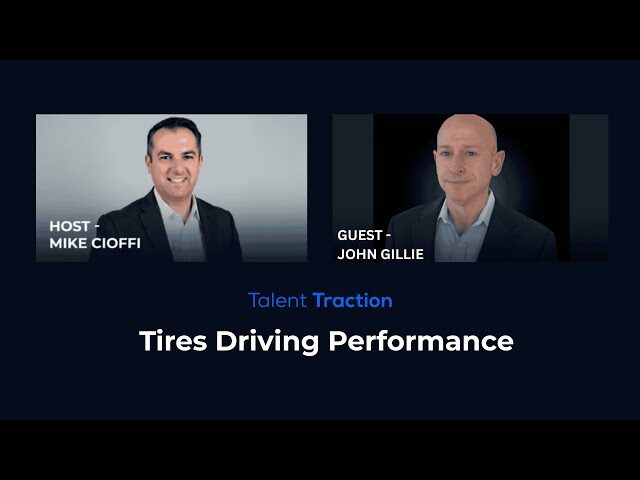
But in this episode of The Talent Traction Podcast, John Gillie makes a compelling case: commercial tires quietly drive performance across the entire trucking economy.
From uptime to safety to asset discipline, tire decisions often determine which operators thrive and which struggle.
This conversation connects leadership philosophy, marketplace economics, and industry cycles in a necessity-based market that never truly stops moving.
From Marine Corps to Marketplace Founder
John’s journey isn’t typical.
From serving in the Marine Corps to leading private-equity-backed operations to founding TruckTractorTrailer.com (TTT), his leadership philosophy is rooted in discipline and long-term thinking.
TTT was born from a simple observation.
Eight years ago, John noticed buyers flipping through outdated truck magazines only to find the inventory already sold. The information lag created friction and inefficiency.
The solution? Move the marketplace to the cloud.
Today, TTT operates as a two-sided marketplace connecting large fleet sellers with owner-operators and small fleet buyers. With more than 200,000 community members, the platform has become a meaningful litmus test for the trucking economy.
A Necessity Industry Even Under Pressure
If COVID taught the economy anything, it’s this:
Trucking is essential.
Healthcare workers were heroes. But so were the truckers who kept food, medical supplies, and infrastructure moving.
That necessity hasn’t changed.
What has changed is the economic pressure.
In 2025, reciprocal tariffs and truck-specific tariffs acted like a dimmer switch on an otherwise strong market. Credit tightened. Insurance costs increased. Owner-operators felt squeezed.
But as John explains, the last several weeks have shown “green shoots” signs of stabilization driven by loosening credit and expectations of lower interest rates.
The trucking industry is cyclical. It absorbs shocks.
But performance still hinges on operational discipline.
And that’s where tires enter the conversation.
Why Tires Drive Performance
In commercial trucking, uptime equals revenue.
Every hour a truck is down is lost income.
Tires directly influence:
- Safety compliance
- Fuel efficiency
- Maintenance cycles
- Insurance risk
- DOT inspection outcomes
- Total cost of ownership
Yet tire decisions are often treated as short-term purchasing choices rather than long-term performance strategy.
John highlights a common mistake: operators focus on equipment acquisition but overlook asset lifecycle management.
The best fleets understand that tires are not expenses they’re performance levers.
Where Operators Quietly Lose Money
The trucking market is fragmented.
More than a million owner-operators make up the backbone of the industry. Small fleets (5–50 units) represent another major segment.
Many operate independently negotiating alone, buying alone, financing alone.
One of the most costly mistakes John sees is short-term thinking in asset acquisition.
Instead of partnering with advisors or conducting thorough inspections, buyers may rush into decisions without representation.
Through TTT, buyers can receive buy-side advisory support at no cost an approach modeled after real estate transactions.
The lesson?
Professional representation reduces expensive mistakes.
In a thin-margin industry, avoiding one bad purchase can define a year’s profitability.
OEM Influence vs. Aftermarket Value
Another powerful theme in this episode is where value is truly created.
OEMs dominate headlines.
But real margin discipline often happens in the aftermarket particularly in:
- Used truck transactions
- Maintenance strategy
- Tire selection
- Inspection processes
- Asset liquidation timing
Large fleets typically buy new and rotate assets every two to three years. Owner-operators purchase those used units.
The health of that secondary market often signals broader economic conditions.
And again, tire condition, maintenance history, and inspection discipline determine asset value.
Tires drive resale outcomes more than most buyers realize.
EV, Autonomy & Industry Hype
What about EV trucks?
John offers a grounded perspective.
EV adoption in commercial trucking has largely depended on tax incentives and government grants. Without those subsidies, widespread adoption slows dramatically.
While EV trucks are listed on TTT and have been part of John’s consulting work including partnerships with Lion Electric and California initiatives the near-term shift from diesel to electric will likely decelerate under current policy conditions.
Autonomous trucking?
It’s coming but gradually.
Consumer auto typically leads trucking by five to seven years. Expect gradual testing, last-mile applications, and phased adoption rather than overnight transformation.
What won’t change?
Freight still needs to move.
Technology Adoption Will Separate Leaders
While trucks may look similar on the highway, operational technology will increasingly differentiate winners from laggards.
Fleet efficiency tools, AI-enabled marketplace insights, predictive maintenance, and asset tracking will define the next five years.
TTT already integrates AI elements to help buyers and sellers self-serve more effectively.
John believes trucking will remain but it will look different.
More digital.
More efficient.
More disciplined.
Leadership Lessons Across Transportation
A recurring theme throughout this episode is leadership discipline.
The operators who survive cycles:
- Maintain liquidity discipline
- Avoid overleveraging
- Think long-term
- Invest in uptime
- Avoid emotional purchasing
- Build advisory partnerships
The ones who struggle often repeat similar mistakes:
- Short-term thinking
- Underestimating inspection importance
- Ignoring lifecycle costs
- Operating without representation
- Failing to plan for volatility
The trucking industry rewards disciplined entrepreneurs.
And it punishes impulsive ones.
Why This Industry Endures
Mike makes an important observation during the conversation:
The tire industry will always exist.
John echoes the same about trucking.
Transportation is not discretionary. It is foundational.
Goods move.
Supply chains adapt.
Cycles occur.
But necessity industries endure.
Tires Driving Performance is ultimately a conversation about hidden leverage points the operational decisions that quietly determine survival.
Tires.
Uptime.
Inspection discipline.
Technology adoption.
Representation.
Long-term thinking.
Final Takeaway
The next five years in trucking won’t be defined solely by tariffs, EV adoption, or automation headlines.
They will be defined by operators who:
- Prioritize uptime
- Treat tires as strategic assets
- Adopt technology wisely
- Avoid short-term decisions
- Build advisory partnerships
- Operate with discipline
Commercial tires may not grab headlines.
But they drive performance.
And performance determines profitability.